Exploring Interconnected Transaction Workflows Across Credit Card Networks and Their Hidden Operational Ripple Effects
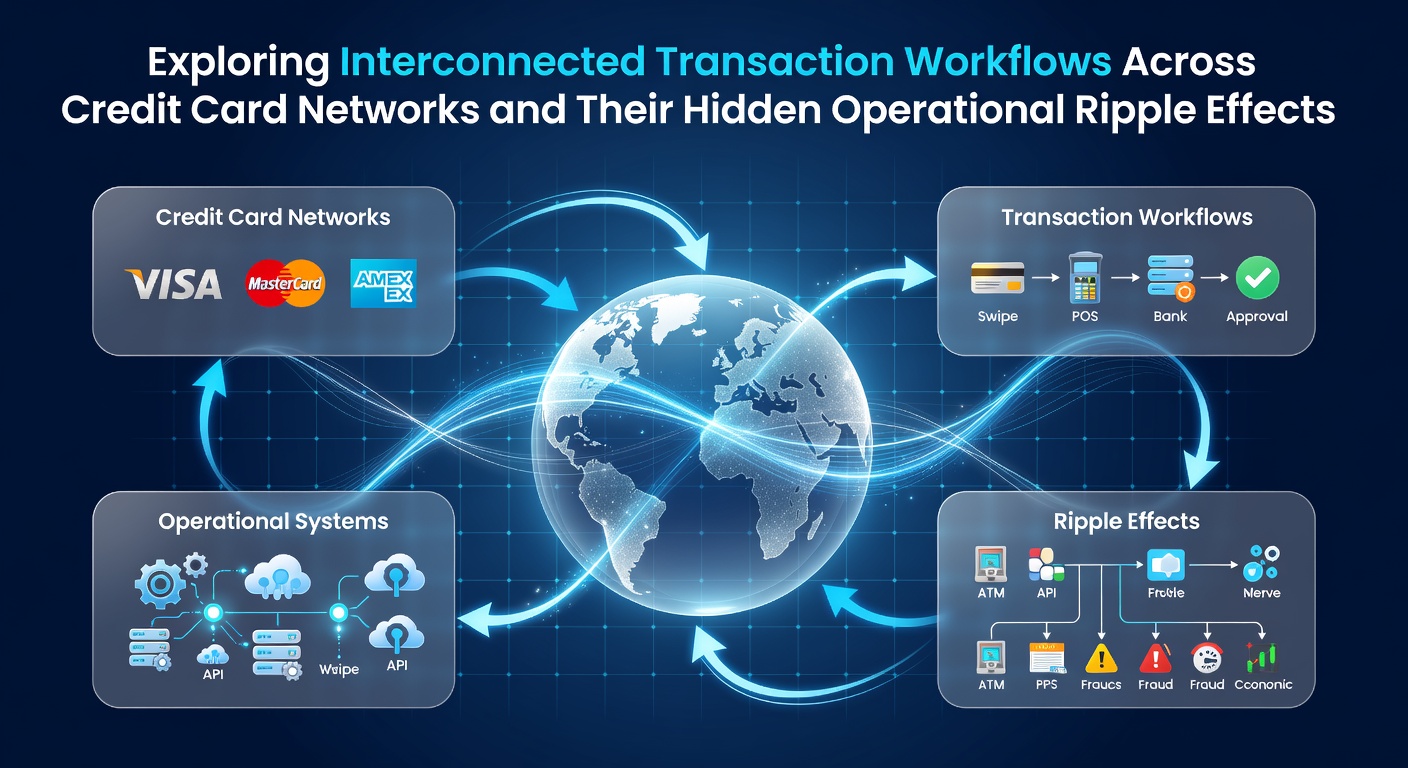
Transaction workflows in credit card networks operate through layered processes that connect issuers, acquirers, and payment processors in real time, and these connections generate operational ripple effects that extend beyond individual transactions. Authorization requests travel from merchant terminals through acquiring banks to card networks such as Visa or Mastercard before reaching issuing banks, while settlement cycles follow separate clearing mechanisms that settle funds across multiple institutions each day.
Interconnected systems mean a delay at one node affects downstream operations, and researchers at the Federal Reserve have documented how processing bottlenecks in high-volume periods create liquidity strains for smaller financial institutions. Data from payment system analyses shows that authorization times average under two seconds under normal conditions, yet spikes in cross-border activity can extend these windows and trigger cascading alerts in risk management platforms.
Core Workflow Components and Network Interactions
Credit card transactions follow a standard sequence that begins with cardholder initiation at the point of sale and proceeds through verification steps that rely on shared databases maintained by multiple networks. The acquiring bank routes the request to the appropriate card association, which then forwards it to the issuer for approval based on available credit and fraud indicators, and this routing depends on standardized protocols that allow seamless handoffs between entities.
Settlement occurs hours or days later through batch processing that nets obligations across participants, and observers note that networks maintain separate rails for authorization versus clearing to manage risk exposure. When one network experiences an outage, traffic reroutes to alternatives, yet this shift increases load on backup systems and can produce temporary fee adjustments for merchants using multiple gateways.
Hidden Operational Ripple Effects on Daily Processing
Operational ripples emerge when transaction volumes surge across interconnected platforms, and studies from the European Central Bank indicate that a 15 percent increase in cross-network volume correlates with measurable delays in reconciliation reports for acquirers. Merchants often encounter batch settlement variances that require manual intervention, while issuers adjust reserve requirements to cover potential chargebacks that propagate through shared fraud detection layers.

Take one processor handling multi-network traffic who documented how a brief Visa endpoint slowdown in early 2025 forced immediate failover to Mastercard rails, resulting in duplicated authorization attempts that inflated processing costs for high-volume retailers. Those who've analyzed settlement data find that such events produce downstream effects on cash flow forecasting models used by mid-sized businesses, and compliance teams must reconcile mismatched timestamps across ledgers maintained by different networks.
Regulatory updates scheduled for implementation around June 2026 aim to standardize real-time reporting requirements across major card associations, and this change will require acquirers to upgrade their monitoring infrastructure to capture inter-network dependencies more precisely. Figures from industry reports reveal that current reconciliation discrepancies average 0.8 percent of total volume during peak periods, and these gaps often trace back to timing differences in how networks clear international transactions.
Impacts on Merchants, Banks, and Consumers
Merchants absorb indirect costs when workflow disruptions extend authorization windows, and acquirers pass along elevated interchange fees during periods of elevated network traffic. Issuing banks maintain higher capital buffers to handle chargeback surges that follow large-scale processing anomalies, while consumers experience occasional declines that stem from temporary system mismatches rather than account issues.
Case examples from Canadian payment studies show how a regional acquirer adjusted its routing algorithms after repeated ripple effects from U.S. network congestion, and the modifications reduced average settlement times by 12 percent over a six-month observation window. Data indicates that consumers in regions with dense network overlap encounter fewer interruptions because redundant pathways absorb shocks more effectively than single-network environments.
What's interesting is how these interconnections influence broader operational planning, since banks must coordinate upgrade cycles with multiple networks simultaneously to avoid overlapping maintenance windows that amplify ripple effects. Researchers have mapped these dependencies using graph analysis techniques that highlight critical nodes where failures produce the widest downstream consequences.
Conclusion
Interconnected transaction workflows across credit card networks create operational ripple effects that influence settlement timing, cost structures, and compliance activities for all participants, and continued evolution of these systems will require ongoing coordination among issuers, acquirers, and regulators. Organizations tracking these patterns through detailed workflow mapping gain clearer visibility into potential disruptions before they affect daily operations.