Merchant Experiences with Security Protocols in Multi-Provider Credit Card Processing Setups

Merchants operating with several credit card processors encounter layered security demands that require careful coordination across different platforms, and those setups often involve simultaneous compliance with PCI DSS requirements, encryption standards, and authentication layers that each provider enforces independently. Research from payment industry reports shows that businesses using two or more gateways report increased time spent on protocol alignment, especially when tokenization methods differ between services.
Core Security Elements in Multi-Provider Configurations
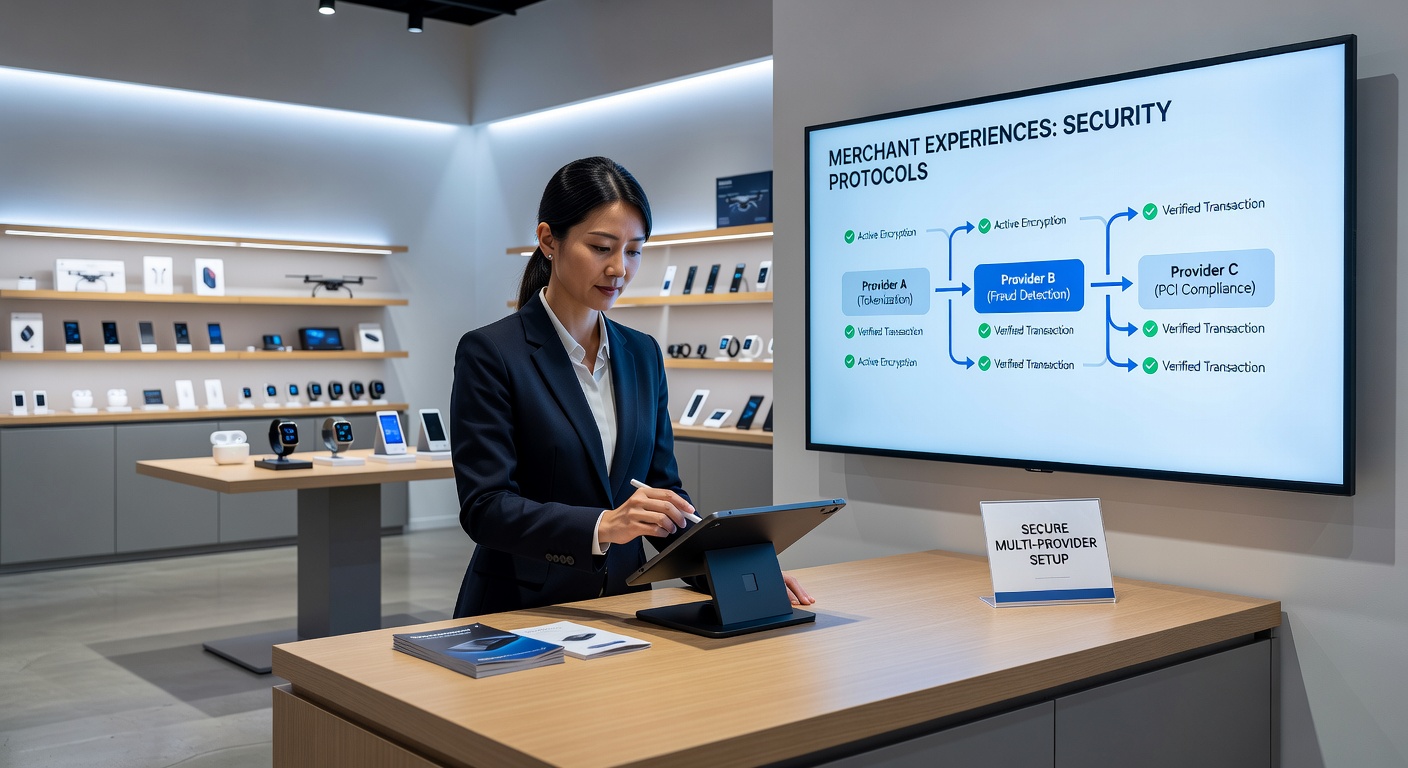
Security protocols in these environments center on data protection during transmission and storage, with merchants implementing end-to-end encryption alongside provider-specific token systems to reduce exposure of cardholder information. Observers note that when one processor uses format-preserving encryption while another relies on point-to-point solutions, the merchant must maintain separate key management procedures for each, which adds operational steps yet maintains isolation between data streams. According to the PCI Security Standards Council, merchants must validate compliance separately for each connection, even when the underlying sales channels remain unified.
Authentication mechanisms also vary widely, so many businesses deploy centralized identity platforms that feed into each provider's multi-factor requirements without duplicating user credentials across systems. Data shows that organizations handling high transaction volumes in 2025 adopted federated access models to streamline logins while preserving audit trails demanded by individual processors.
Practical Adjustments During Integration
Merchants describe mapping security controls early in the setup phase because mismatched certificate standards between providers can delay go-live dates by weeks. One common approach involves creating a unified security policy document that translates each processor's rules into shared procedures for staff training and incident response. Those who've studied these transitions find that pre-integration audits help surface gaps in logging formats, allowing teams to configure monitoring tools that aggregate alerts from all gateways into a single dashboard.
Token vaults maintained by separate providers require merchants to track which tokens belong to which system, since cross-provider token exchange remains limited. This separation actually strengthens security by preventing a single breach from exposing all stored credentials, although it demands precise record-keeping during reconciliation. Studies indicate that firms investing in automated token mapping tools cut manual review time substantially once multiple processors are live.
Observed Patterns in Merchant Operations
Businesses frequently update their internal procedures after initial rollout because real-time monitoring across providers reveals inconsistent alert thresholds for suspicious activity. What's interesting is how some merchants standardize response playbooks that reference each provider's specific escalation contacts, which reduces confusion during potential incidents. Figures from industry analyses reveal that companies managing three or more processors allocate roughly 15 percent more staff hours to security oversight compared with single-provider operations.
Regulatory expectations add another dimension, since upcoming updates scheduled for May 2026 emphasize enhanced logging and vulnerability management that apply uniformly regardless of provider count. Merchants preparing for those changes often run parallel testing environments to verify that each processor meets the new criteria before broader deployment. Research indicates early adopters who align their systems ahead of deadlines experience fewer last-minute adjustments.
Regional Regulatory Influences on Protocol Choices
Merchants operating across borders must also account for differing regional mandates, such as those outlined by the European Central Bank for strong customer authentication and similar guidelines issued by the Reserve Bank of Australia for data localization. These requirements influence which encryption methods and access controls get prioritized during provider selection. Observers note that companies serving multiple markets build modular compliance frameworks that slot in provider-specific modules without rebuilding the entire security stack.
Training programs evolve alongside these setups, with teams learning to navigate each provider's security portal while using shared internal tools for oversight. Data from payment associations shows consistent investment in cross-platform simulation exercises helps staff recognize anomalies faster when multiple gateways feed into the same sales pipeline.
Conclusion
Merchants continue refining their approaches to security protocols as multi-provider credit card processing becomes standard practice, focusing on integration points that preserve both compliance and operational efficiency. The patterns emerging from these experiences highlight the value of early mapping, unified monitoring, and proactive alignment with evolving standards expected in 2026. As processors introduce incremental updates, businesses that maintain flexible yet rigorous security architectures position themselves to handle additional providers without proportional increases in risk exposure.